
What Happens to Your Equipment After the Auction?
When a business closes and the equipment sells, most sellers never find out what happens next. The auction closes, the buyers haul their items away, and the property gets handed back to a landlord or new owner. From the seller's perspective, that's the end of the story.
But it's not the end of the story. Not even close.
At Grafe Auction, we've conducted hundreds of commercial auctions every year since 1959. We see what comes in and we see who takes it away. The range of people on the other side of these sales, and what they do with what they buy, is one of the most genuinely interesting parts of this business. This April, as a lot of people are thinking about waste and sustainability, it's worth talking about what actually happens to commercial equipment after the auction closes.
Someone Was Waiting for That Exact Item
The first thing to understand about auction buyers is that most of them are not buying speculatively. They came looking for something specific.
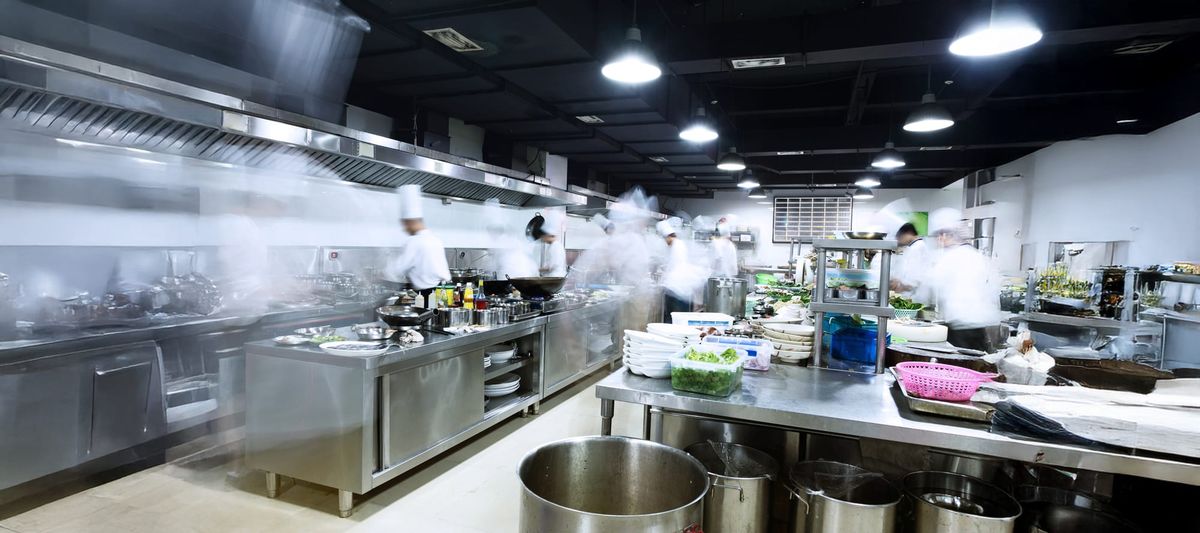
A restaurant owner who just signed a lease is watching commercial oven lots because she needs a range for her kitchen and can't afford to buy new. A laundromat operator in another state has been waiting for commercial washers to come available in his price range. A warehouse startup is searching for forklifts and pallet racking because outfitting a facility with new equipment would consume half his startup capital. These aren't casual shoppers. They're people with real needs who found an auction that had what they were looking for.
When Big Lots closed its distribution center in Durant, Oklahoma in early 2025, the auction drew 686 active bidders and generated 133,702 bids across 1,545 lots. Raymond forklifts sold for $7,500 to $11,000 each. A Genie boom lift went for $17,000. A Tennant ride-on floor cleaner fetched $12,000. Every one of those buyers had a warehouse to run or a business to outfit, and they were competing hard for the equipment to do it.


The New Business Opening Down the Street
One of the most common buyer types in commercial auctions is the entrepreneur who is opening something new. A restaurant, a gym, a cafe, a small retail shop. The economics of starting a business are challenging enough without spending full retail price on commercial equipment, and auction is often how these buyers close the gap between what they can afford and what they need.
When Mankato Brewery closed its doors in early 2025, its auction drew 427 bidders for just 454 lots — nearly one registered buyer for every item offered. The sale closed at a 96.8% sell-through rate. A complete 15-barrel brewhouse sold for $7,500. Twin Monkeys and Cask Global canning lines went for $4,000 to $7,500. Sixty-barrel fermentation tanks found buyers at $2,500 to $2,750 each. A walk-in cooler sold for $6,000. The people bidding on that equipment weren't collectors. They were brewers — opening new taprooms, scaling up production, or replacing equipment they couldn't afford to buy new. One brewery's closing became the starting point for someone else's.
That's the circular economy in action. Equipment from a brewery that no longer needed it became the starting inventory for someone else's venture, without a single item going to a landfill.
The Dealer Who Gives Equipment a Second Life
Not every buyer is an end user. A meaningful portion of auction buyers are equipment dealers and resellers who buy, refurbish if needed, and sell again. They're particularly common in categories like commercial kitchen equipment, fitness gear, and office furniture.
These buyers play an under-appreciated role in the lifecycle of commercial equipment. They take items that might need minor repairs or cleaning, bring them back to good working condition, and make them available to buyers who couldn't or didn't attend the original auction. An independent restaurant owner who doesn't track auction calendars might still end up with a Hobart mixer that passed through a dealer's hands after a restaurant liquidation. The equipment gets another owner, then potentially another after that.
From a sustainability standpoint, dealers extend the chain considerably. An item that sells at auction once and gets refurbished might serve two or three more owners before it genuinely reaches the end of its useful life.
The Buyer in Another State
One of the structural advantages of online auction is geographic reach. Grafe Auction's registered bidder base includes over 280,000 buyers, and auctions routinely draw bidders from well outside the local area. Equipment that might have struggled to find a buyer through local channels finds one because the online format puts it in front of the right person regardless of where they are.
This matters for equipment that has a strong secondary market in certain regions or industries. Commercial refrigeration from a closed grocery store might sell to a buyer in a region where food service is growing faster than new equipment supply can keep up. Brewery equipment from a closed taproom might go to a craft brewer in a different state who is scaling up. The geographic spread of online bidding means the equipment finds the buyer who values it most, not just the buyer who happens to be nearby.
When Auction Makes the Impossible Possible
Sometimes the buyer on the other end of an auction isn't a business at all. Ecolibrium3, a Duluth nonprofit working to build equitable and sustainable communities, needed to furnish a community center renovation. Their original budget estimate came in at $850,000, a number that would have gutted their capacity to actually serve the community the space was built for.
Instead, they turned to Grafe Auction and participated in three Target City Center auctions, loading up semi-trucks with office furniture, modular systems, and fixtures from Target's corporate liquidation. Their total spend, including transportation, installation, and modifications, came to approximately $50,000. That's a 94% cost reduction.
The modular cubicle systems they won at auction became flexible room dividers that could be reconfigured for different community needs, a solution that actually worked better than what they had originally planned. The $800,000 they didn't spend went back into their mission.
That equipment came from a corporate office that no longer needed it. Without auction, it likely would have been hauled away. Instead it became the foundation of a community center in an underserved neighborhood. That's as clear an example as there is of the lifecycle continuing, and of what happens when the right buyer finds the right auction at the right time.
What Sellers Can Take Away From This
If you're a business owner considering liquidation, or a company planning a facility closure, it helps to know that the equipment you've taken care of has somewhere useful to go. The commercial oven your kitchen crew maintained for eight years will likely end up in someone else's kitchen. The office chairs your team sat in every day will furnish someone else's growing company. The refrigeration equipment from your closed store will keep someone else's food cold.
The outcome, across thousands of auctions and hundreds of thousands of lots, is that usable equipment keeps being used. That's good for the buyers who get affordable tools to build their businesses. It's good for sellers who recover value they might otherwise have left on the table. And it's good for an Earth that doesn't need any more functional commercial equipment in a landfill.
If you're ready to see where your equipment goes next, visit grafeauction.com to learn more about selling with us, or browse upcoming auctions to find your next great find.